1. The Frame (lead)
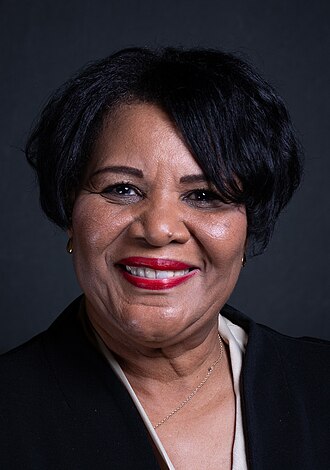
What people think this is about: A formerly incarcerated Black grandmother and criminal justice reform advocate, pardoned by Trump in his first term after a high-profile campaign involving Kim Kardashian, now formally installed as the White House’s first “pardon czar” to recommend clemency for others serving harsh sentences for nonviolent crimes, especially “lawfare” victims.
What the machinery is actually doing: Trump created an informal advisory lane for a loyal, high-visibility success story from his prior term—someone who already fed him clemency lists—to channel recommendations, signal reform credentials to targeted audiences, and route cases outside or alongside the slower DOJ pardon attorney process, while the ultimate grant power stays with the president.
2. Observations (meat)
-
Johnson’s 1996 life sentence for roles in a multi-kilogram cocaine ring (including money laundering and structuring) was extreme by later standards; she served ~21–22 years before commutation in June 2018 and full pardon in August 2020. Trump has repeatedly framed it as something “that today probably wouldn’t even be prosecuted.”[1]
-
The “pardon czar” title and role were announced February 20, 2025, during a White House Black History Month event. It formalized work Johnson had already done at the tail end of Trump’s first term submitting names. Trump publicly said he would “follow those recommendations.”[2]
-
Concrete outputs include involvement in the March 2025 commutation of Carlos Watson, May 2025 defense of pardons/commutations for Julie and Todd Chrisley (described by Johnson as “weaponized justice system” victims), and Larry Hoover’s federal sentence commutation.[1]
-
Johnson has emphasized vetting for community safety, reentry support (jobs, housing, mental health, family/faith), and second chances for nonviolent offenders, while stepping back from her nonprofit CEO role. She has warned publicly (August 2026) against scammers charging fees or promising access, implicitly targeting figures like Angela Stanton King.[3]
-
Cross-aisle praise exists (e.g., Van Jones called it “huge” for putting a formerly incarcerated person in the role), but the position remains advisory and outside formal DOJ structures; critics note the pardon process has historically been slow and prosecutor-influenced, with this lane potentially accelerating favored cases.[4]
-
The role sits at the intersection of personal redemption narrative, political signaling on criminal justice, and practical gatekeeping in a system where clemency is ultimately discretionary and high-profile.
3. Snapshot
Alice Marie Johnson (b. 1955) is a Mississippi-born advocate who spent over two decades in federal prison after a 1996 drug conspiracy conviction tied to a Memphis cocaine operation. Trump commuted her sentence in 2018 and pardoned her in 2020 following Kardashian’s advocacy. On February 20, 2025, he named her the administration’s first “pardon czar” to recommend clemency candidates, particularly nonviolent offenders and alleged lawfare victims. She remains in the role as of mid-2026, continuing advocacy while navigating access and scamming issues around the clemency pipeline.
4. Timeline of material facts
- May 30, 1955: Born in Mississippi.[1]
- 1993 arrest; 1996 conviction on drug conspiracy, money laundering, and structuring counts related to multi-ton cocaine operation; sentenced to life without parole. (LT)
- 2017–2018: Viral advocacy (Mic interview); Kardashian meets Trump; June 6, 2018 commutation and release. (LT)
- August 28, 2020: Full presidential pardon; speaks at RNC. (LT)
- 2018–2024: Advocacy, memoir (After Life), nonprofit (Taking Action for Good), First Step Act support. (IT)
- February 20, 2025: Appointed White House Pardon Czar during Black History Month event. (LT)
- March–May 2025: Linked to Watson commutation; defends Chrisley cases; involved in Hoover commutation. (IT)
- August 24, 2026: Public warning on pardon scammers. (LT)
- 2026: Mississippi legislative resolutions honoring her appointment. (LT)
5. Sides (steelman only here)
Johnson / Reform Advocates (IT/LT mix): Best case is lived experience inside the federal system plus demonstrated rehabilitation makes her well-positioned to identify worthy candidates the formal process overlooks, prioritize reentry success, and push back against disproportionate sentences or weaponization. She stresses safety and support structures; Trump has publicly endorsed following her recommendations.
Critique:
LT: Her own case involved leadership in a significant trafficking organization per trial evidence and sentencing findings, even if she did not personally sell drugs on the street.
IT: The role is advisory only; outcomes remain presidential discretion, and public focus on sympathetic “just like you” cases can create perception of selective mercy.
Trump Administration / Political Realists (IT): Using a visible success story from the prior term formalizes an existing informal channel, generates positive cross-aisle coverage on reform, and allows targeted clemency without broad policy overhaul. It rewards loyalty and personal connection while addressing family/reentry concerns Trump has voiced.
Critique:
LT: The position is new and non-statutory; ultimate authority stays with the president.
IT: It can function as narrative management and selective acceleration rather than systemic overhaul of the pardon attorney’s office.
6. Rumsfeld Matrix
- Known Knowns: Johnson’s conviction details, commutation/pardon dates, February 2025 appointment announcement, specific 2025 cases tied to her input, and her public emphasis on rehabilitation and safety.
- Known Unknowns: Exact volume and criteria of recommendations submitted; degree of coordination or bypass of the Office of the Pardon Attorney; long-term recidivism or community impact data on recommended releases.
- Unknown Knowns: Internal White House vetting lists or rejected cases; any private criteria Trump applies beyond public statements.
- Unknown Unknowns: Future expansion or contraction of the role; how it interacts with broader DOJ or congressional clemency reform efforts.
7. Incentives map
- Johnson gains continued public platform, status, and ability to advance personal redemption/advocacy mission (nonprofit background, memoir sales, speaking).
- Trump administration gains a high-signal reform story that plays well with specific demographics and moderates, plus a loyal external-to-DOJ advisor for politically useful clemency.
- Media/attention stack favors the redemption arc and Kardashian backstory over granular case outcomes; engagement favors “lawfare” framing or high-profile names (Chrisleys, Hoover).
- Potential downside incentive: selective application risks accusations of favoritism or grift around access (addressed by Johnson’s scammer warnings).
8. Dueling AI advice
Moral AI Advice: Johnson’s appointment illustrates how personal narratives and loyalty networks shape clemency more than abstract process reform. Track actual grants versus rhetoric, demand transparent criteria, and evaluate releases on public-safety outcomes rather than optics. Second chances are real; gatekeeping against exploitation is also real.
Evil AI Advice: Perfect vehicle for controlled mercy theater—pick photogenic nonviolent cases, let the story run, monetize the “access” lane quietly if possible, and never let the formal bureaucracy slow the boss’s favorites. Scammers are competition; crush them publicly while keeping the real pipeline efficient for paying or connected players.
9. Practical takeaway
- Watch for patterns in future grants: nonviolent drug cases vs. higher-profile or politically resonant ones.
- Johnson’s public statements on reentry support and safety vetting are testable against results.
- The role remains advisory—presidential discretion is the constant.
- Scammer warnings indicate real-world friction around perceived access; legitimate petitions route through official channels.
- Cross-reference claims of “lawfare” or disproportionate sentencing against original case records.
- Mississippi legislative honors and cross-aisle comments show the narrative travels beyond one side.
10. What would falsify this read
- Public release of comprehensive recommendation logs showing systematic review independent of political profile.
- Multiple high-profile grants to cases lacking the “lawfare” or celebrity-adjacent framing.
- Formal integration or subordination of the czar role into the DOJ pardon attorney structure with published metrics.
- Evidence of Johnson or associates charging fees or directing applicants to paid intermediaries despite public warnings.