Article
How my Dad Saved Civilization

Ok I admit the title is a bit over the top. But I’m allowed to brag about my Dad. You probably don’t care. But perhaps you’re interested in how the Military Industrial Complex actually works. So this is a love letter to my Dad who passed in 2016. It’s also unapologetic at being pro USA. If you can't handle that, the door is right over there.
Before there was Silicon Valley there was Aerospace
Graduating from Case Western Reserve with a degree in Industrial Engineering, my Dad was self taught when it came to electronics. He got drafted (Korean War) and applied to Radar school, which he got (supposedly impossible if you weren't from an army family but he had killer test scores), that might be where he learned it.
So like many young engineers in the late sixties after being stationed at White Sands NM he wanted to move out West. When an aerospace company recruited him out of a company called Electric Boat where they built submarines in CT. So he was recruited by and moved to Philco (later Ford Aerospace) Sunnyvale where he met and married my schoolteacher mom. That's his wedding photo above.
From there he got recruited to a company called Canoga in Southern California and they moved to Encino, my mom got a job at LA Unified which was horrible so she jumped to Simi Valley because they offered her $1,000 and kept her seniority. Canoga had management problems and they fired their lead sales guy Jack Wills. Jack had a bunch of rich dentist friends and a friend who owned a machine shop named Datron.
So they started an aerospace company with some other founders, aerospace being the thing in the late 60's. My dad ran engineering and didn’t take any salary for two years taking stock instead. And they lived off my Moms salary as a schoolteacher.
Aerospace were the original startups.
Whiskey
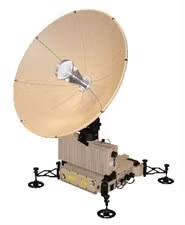
My dad was really sharp and he realized that line of sight radio needed to be replaced with satellite communications. So he formed a friendship with someone at the DoD and they put their heads together and came up with an idea that became WSC-1 which ultimately was deployed in every ship in the fleet. Datron won the bid, beating out my Dad's old company (who whined like little bitches). They lost the bid for WSC-2 the follow on but won WSC-3 and WSC-IV. Some giant military company did the satellite. My Dad's company was tiny, satellites were a little bit beyond their capabilities.
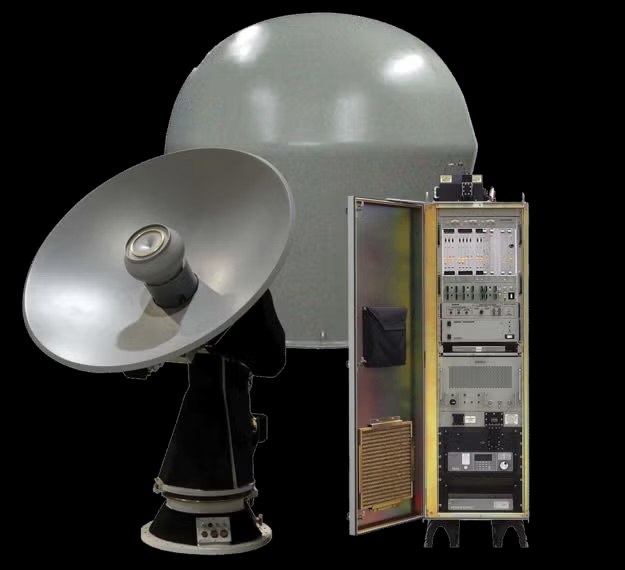
Here's a photo of a WSC, the dish looks funny because ships are noisy places in radio, so it shields the antenna from local noise.
My Dad's speciality was analog system control. It sounds easy as a human to think of "move to this position and stop", but it's actually pretty hard, inertia is not your friend.
Crackback
Whiskey was really successful so the Navy wanted more. (Imagine that, wanting to talk to your ships!) For the Navy, they wanted a system that could maintain communications during a storm with 30 degree swells. The satellite had less than a degree of beamwidth which means the pointing system had to keep position to that accuracy while the ship is rotating underneath it. Point your finger at the light in your ceiling and keep it there while dancing on roller skates. Welcome to the Navy.
Tinkertoys for the win
Self-taught since college, my dad was both old school and a total nerd. He used to say if you couldn't figure out something on a sliderule you didn't understand the problem so he had a bunch of those. He had every programmable calculator Hewlett Packard made until they stopped making them.
Total Dad move: He gave me his old HP-65 in junior-high when he got his HP-41 even though he had a spare HP-67 so I would "appreciate" the 67 when he gave me that. (No backspace or insert on the HP-65, you had to enter your program perfectly the first time... and there was no way to save the program... HP-67 introduced insert/delete and you could save your programs to these little magnetic strips 40 instructions at a time)
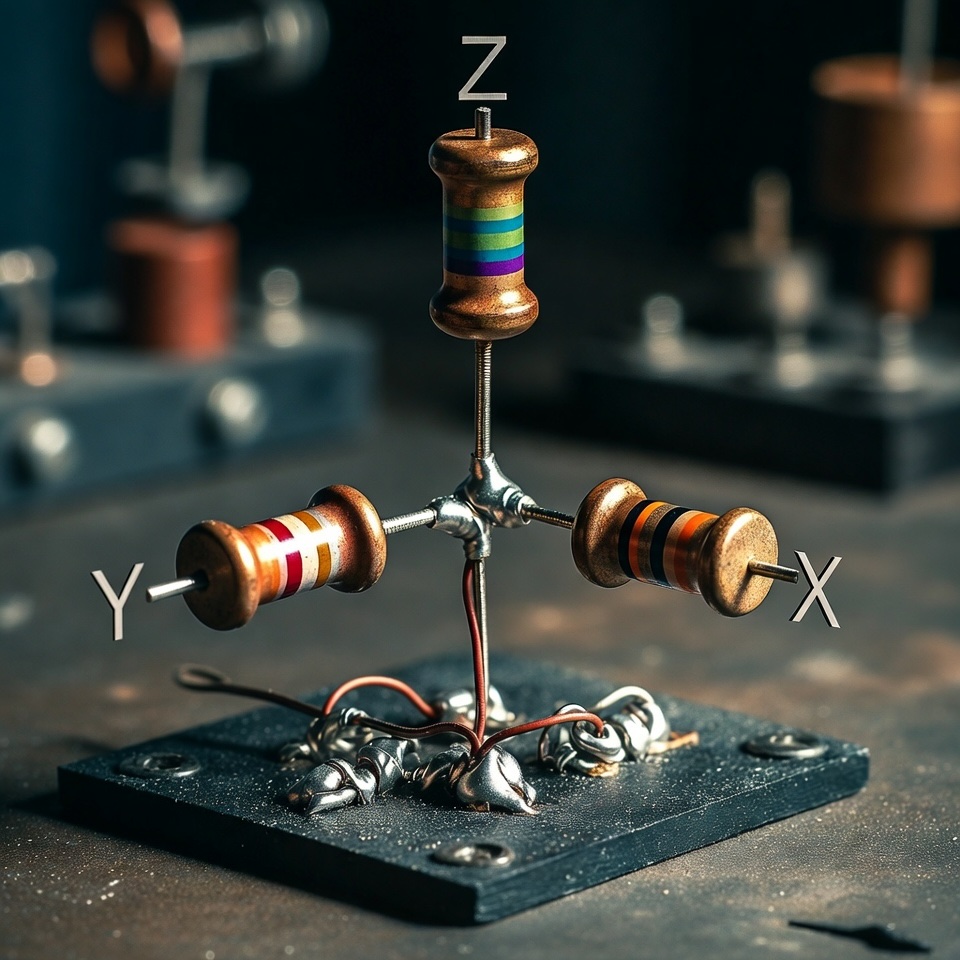
But his most useful computer was made out of some of my tinkertoys, it didn’t really compute anything it was just 3 perpendicular sticks for the roll, pitch, yaw. My dad could spin it around and use it to keep track of what was going on. The TinkerToy was an upgrade, he used to have one made of 3 resistors soldered together at 90 degrees to each other.
He quickly realized that a traditional azimuth+elevation system wouldn’t work for the Navy. When he tried to explain this to the main contractor Raytheon they were skeptical so he told them he worked it out in the computer. Then they believed him. He didn't tell them he worked it out on his "analog computer", which was his Tinkertoys and his brain...
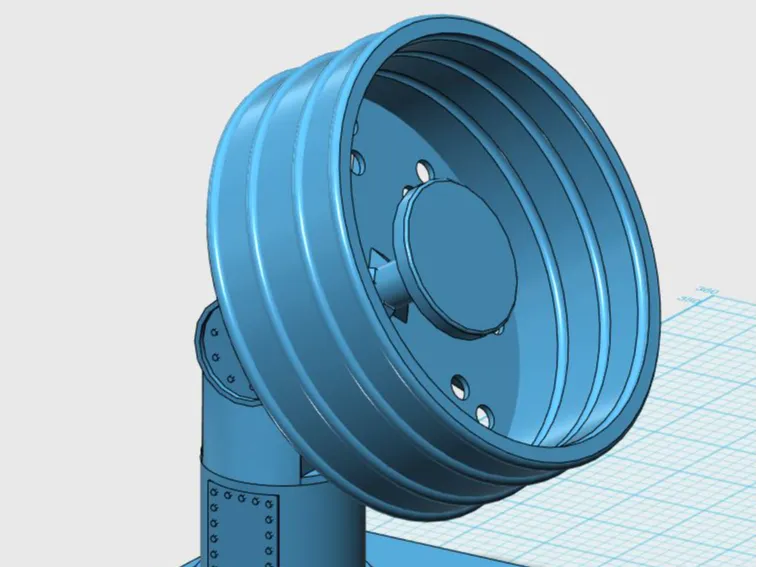
So Crackback was born. It has three axes an Azimuth (NSEW) and two elevations that are interrelated. Its official name is NESP. It’s wild to watch with the dish locked onto a fixed direction while the ship gyrates under it.
U.S.S. Datron
Another fun Datron project was the simulator platform the Navy uses to test their gear. That’s basically a mounting platform that has programmable roll, pitch and yaw so the Navy can have a storm on demand. So you load your system on the platform and they run it through their crazy torture cycle and it has to stay on target. (Staying on target is a big deal for the DoD, go figure.) The Military being the Military, they dubbed it the U.S.S. Datron.
Fix the problem not the blame
So at first, CrackBack wasn’t working on the simulator. It would get in some mode where it would start dancing and it looked freaky. So Datron spent two months trying to debug it with my Dad there. My Dad was a bit grumpy about this because he had this rule: "If it doesn't work at the factory, it's not going to work in the field." No on likes to have to live out of a hotel room because the guys at the factory didn't do their job.
I’m guessing but I’m thinking that part of the problem was that my Dad had a hate/hate relationship with the software engineers. So there was the servo loop which was stuff only my Dad understood, and it had new scary stuff like “feedforward”. Then there was everything else in the software. At that point I had been working for Datron on and off as an “engineering assistant” which mostly meant porting my Dads software from his calculators to a flavor of basic or C except for the master program that allowed any system to be simulated from the basic equations where he just gave me the algorithms for factoring polynomials. So he looped me in. I think I was in college at this point, I don't remember.
Here’s the thing. Software engineers don’t fix bugs they fix bug reports. So the first thing I did was figure out how to reproduce the problem. That was the first hour, I figured out if I pointed the dish past 360 degrees, it would flip out, reverse 360 degrees, then flip out again, and get in that cycle.
So I had my dad print me out the source code that night using his portable HP (of course), ink-jet printer.
Then I read through the source code and found the problem. The problem was Azimuth cable wrap. Cables cannot go infinity in one direction so what happens is you have a certain amount of slack, say 720 degrees. After that you have to spin around and unwind the cable then go the other direction.
I don’t remember the exact details but basically there was one line in the code that had a test and when you got close to cable wrap it would subtract 10 degrees from the azimuth target every time through the servo loop until it hit the reverse cable wrap at which point it would do the same thing in reverse. The Elevation1 and Elevation2 axes would try to compensate for the Az going crazy so you’d get the freak out look.
So I fixed that logic that first day and the second day we demonstrated that it worked. Thinking back on this now, I think this was a bittersweet victory for my Dad, I think he had planned to spend some time with me but then we were only there two days. So win, Datron closed the contract, lose he didn't get to hang out with me in the South having tasty Southern Food.
Again, NESP on every Navy ship. If you've talked to a loved one serving, you've used a system my dad invented.
Take aways from that:
If it doesn't work in the factory, it won't work in the field.
Programmers fix bug reports, not bugs. Tell people when you have a problem.
Fix the problem not the blame.
Software is different than hardware. You can go out and look at the atoms and see when something is 99% done. But software can be off by 1 line of code, and be a complete muddle. That’s why software is hard to manage, and why my dad had a hate/hate relationship with the software folks. (Plus the head of SW Engineering had a PhD…)
Tasker
There are land based terminals too and Datron built some of those but the Army and Marines have different problems than the Navy, because the Earth doesn't move, but the people do, and fast. Those terminals for that are what I called the snap together system because it comes in pieces they get moved around and assembled on site. They called those Tasker inside Datron because Tasker Industries built the early design, but Datron under bid Tasker for the follow-ons. (The way military contracting works is that the R&D for the first one is one contract, while the building is a different one.)
They didn’t need a fancy 3-axis gimbal mount they needed to be lightweight enough to be carried and put in place. You have to be able to pull the pieces off the truck and be calling in your airstrikes in 30 minutes. When we would go to the factory on weekends these systems would be scattered all over the shop floor (though in Army green).
The Fishing Reel
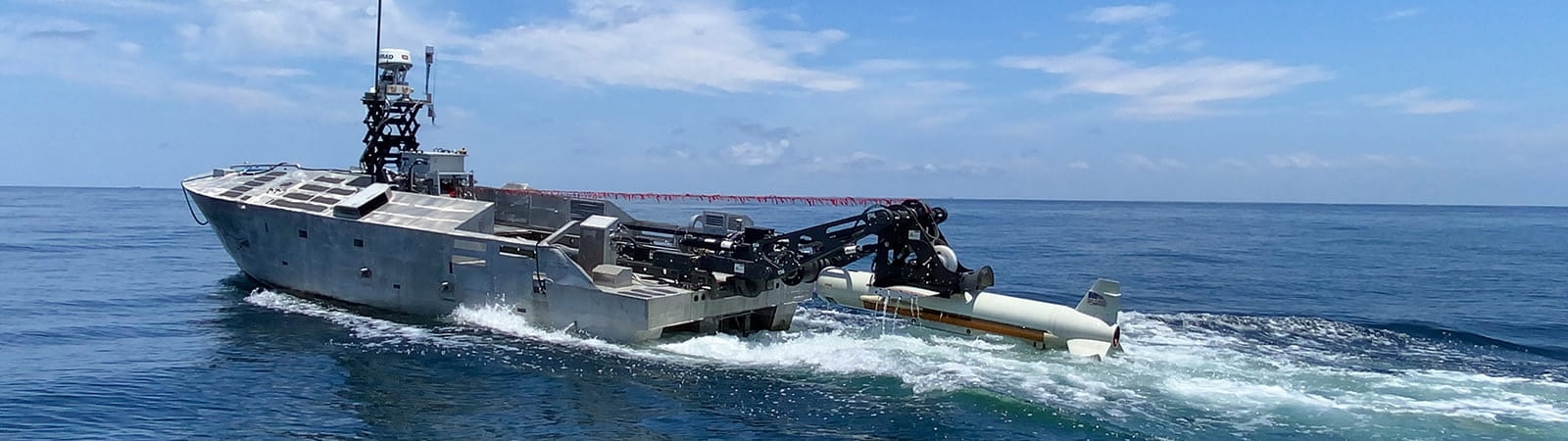
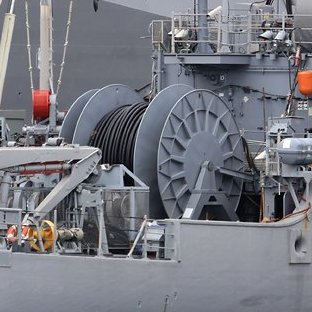
Another Datron project was what my Dad called the fishing reel, which was the spool for a towed sonar array, which is a long rope with a bunch of sonar senses on it. You can see one on this boat:
So why am I talking about all this today?
Because there’s this X chatter going around that the USN was unprepared for the Strait of Hormuz.
That’s just dumb. I’m merely DoD contractor adjacent, and I knew the DoD has been preparing for the Strait of Hormuz for decades. You don’t have to believe me, you can go back and read the procurement records. Here’s a funny one of my Dad’s former company Canoga whining they didn’t get the Whiskey contract: https://www.marines.mil/portals/1/Publications/DCG%20Vol%2050%20Dec%201970.pdf That’s from 1970.
What really triggered me was watching this video on YouTube talking about how the U.S.S. Tripoli is the perfect ship for the Strait of Hormuz. Marine support ships usually have a well to offload boats, but the Tripoli doesn’t because for the Strait of Hormuz you don’t need a well. So what it has is a flight deck and helicopter pads, because if we have to take the strait, we’re going to fly over the beach defenses the mad mullahs have spent the last 47 years building. (Can you say Maginot Line in Farsi. Didn't work then either.)
A lot of military procurement is to push the envelope to figure out what the limits are, so they built the Tripoli with no well at all and tried it out, found out that they needed to unload some big items so they still needed a well, so the next few rounds of Marine support ships have a smaller well. Anyways here it is: https://youtu.be/vMy69tl25r8?si=LqBZXmNt1oM9l0AD
That fishing reel? They don't sweep collect mines by having wooden ships sailing around any more. Instead, they send a ship towing sonar lines using my Dad's "Fishing Reel", to pinpoint locations, then they drop a bunch of 1-way drones in the water that go and clamp onto the mine and destroy it with a shaped charge.
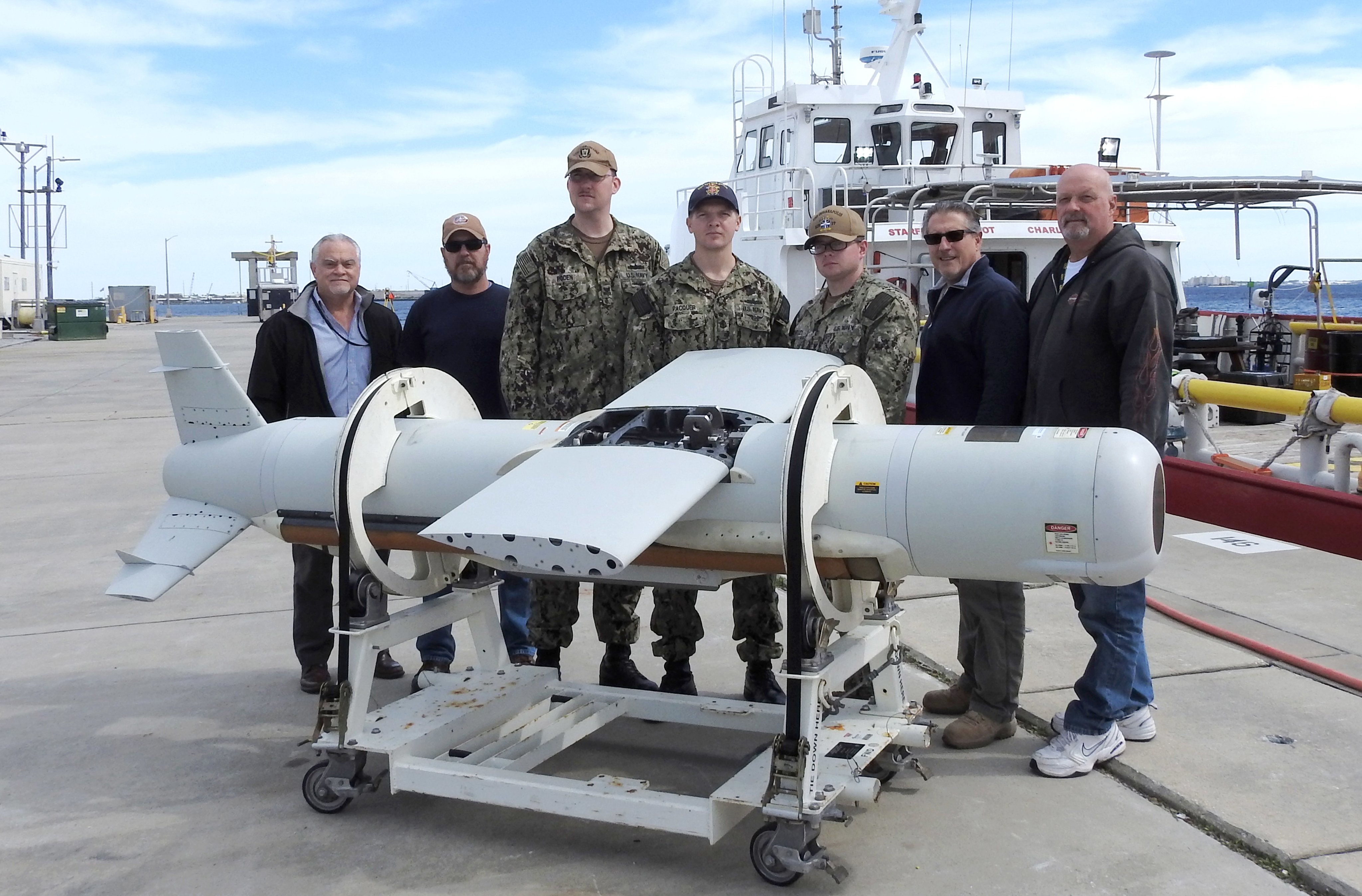
Though these days the towing is unmanned, the mine hunter tows a sensor package thing drone:
This is what it looks like out of the water:
Raytheon started building these in 2019...
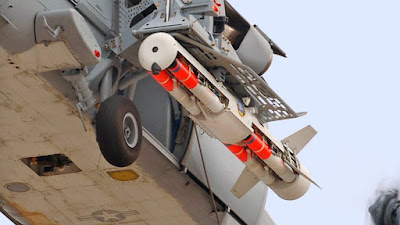
This is a helicopter loaded with a mine destroying payload:
Here's Raytheon's Barracuda system where everything is the smart drone:
So yeah, my Dad saved civilization.
You're welcome.
Images